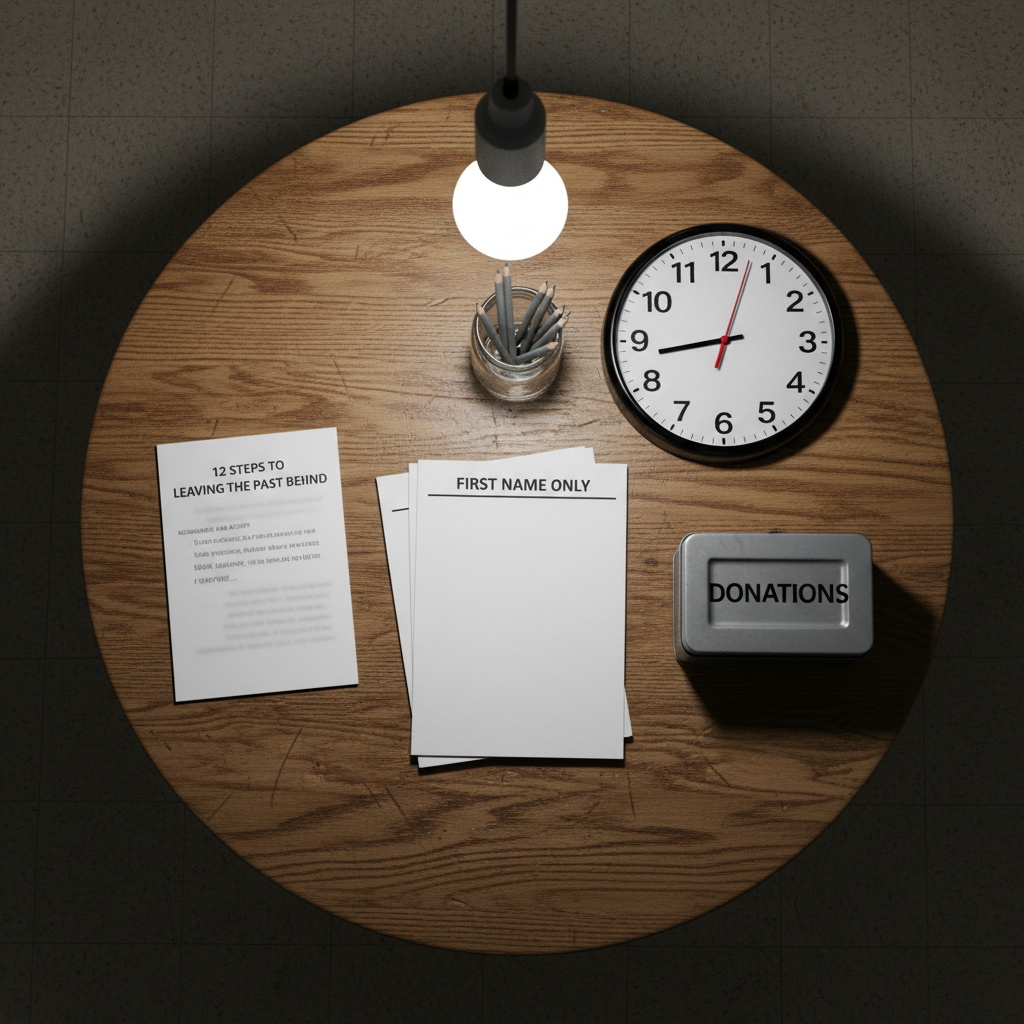
A round oak table in a small, windowless community room, its surface crowded with anonymous confession tools: a stack of blank sign-in sheets labeled “FIRST NAME ONLY,” a jar of dull pencils, a cheap plastic clock ticking loudly on the wall, and a metal cash box labeled “DONATIONS.” Beside them lies a single, neatly folded sheet titled “12 Steps to Leaving the Past Behind,” with ominously vague language visible. Overhead, a bare bulb dangles, casting stark, top-down cinematic lighting that carves hard-edged shadows across the table’s wood grain. Framed from directly above in a bird’s-eye view, the composition feels clinical yet unsettling, emphasizing ritual, secrecy, and the struggle to shed violent habits.

The Film

Step inside the shadowy world of Murderers Anonymous through stills, character portraits, and tense group sessions.
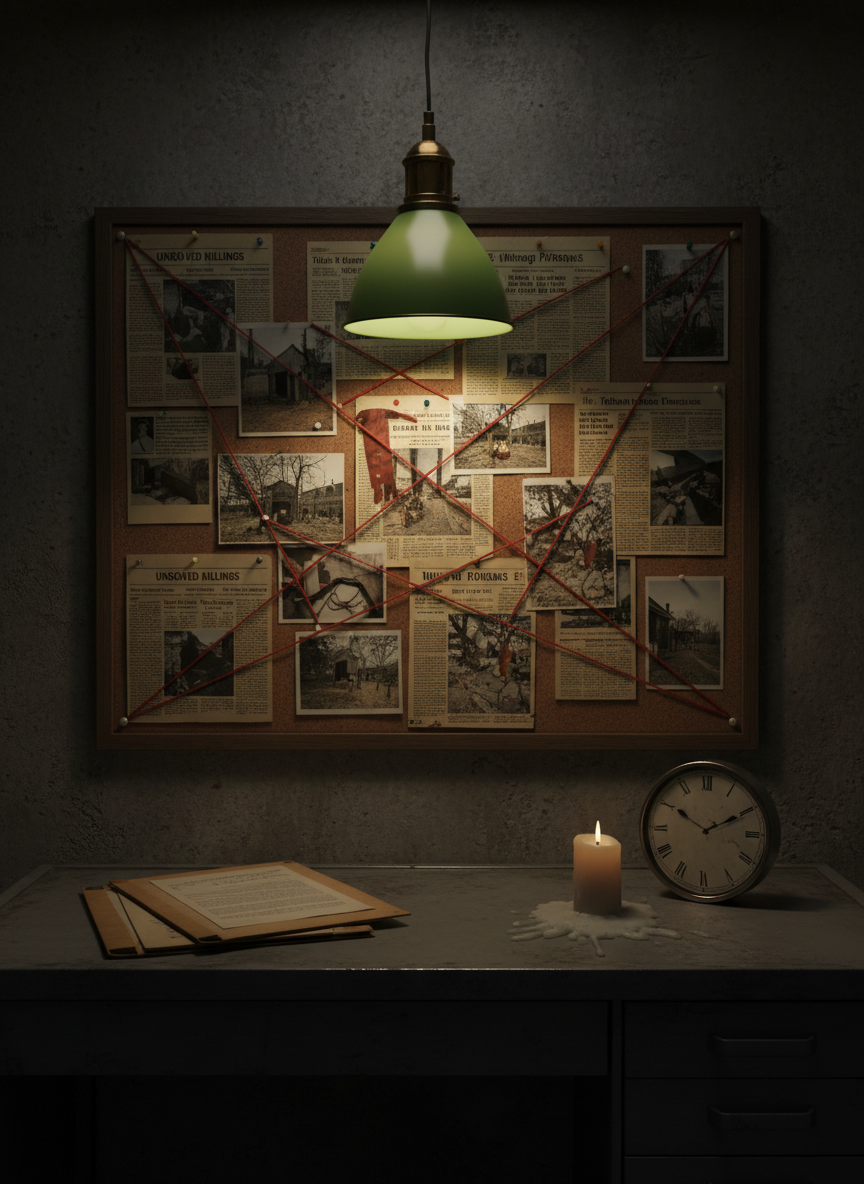
A meticulously arranged corkboard on a concrete bunker wall, covered with yellowed newspaper clippings about unsolved murders, red string connecting pinned evidence photos of locations and objects, but never faces. A tarnished brass desk lamp with a green glass shade pools warm light over the center of the board, while the rest of the room recedes into velvety darkness. On a metal desk beneath the board rests an open manila file, a half-melted candle, and a ticking analog clock reading midnight. Captured in a cinematic, low-angle close-up with dramatic chiaroscuro lighting, the atmosphere feels obsessive, conspiratorial, and ominously quiet, as though the room itself is keeping terrible secrets.

From flickering basement lights to whispered confessions, these stills capture the uneasy intimacy of each meeting, inviting you to scan every face and wonder who’s ready to break their deadliest habit.
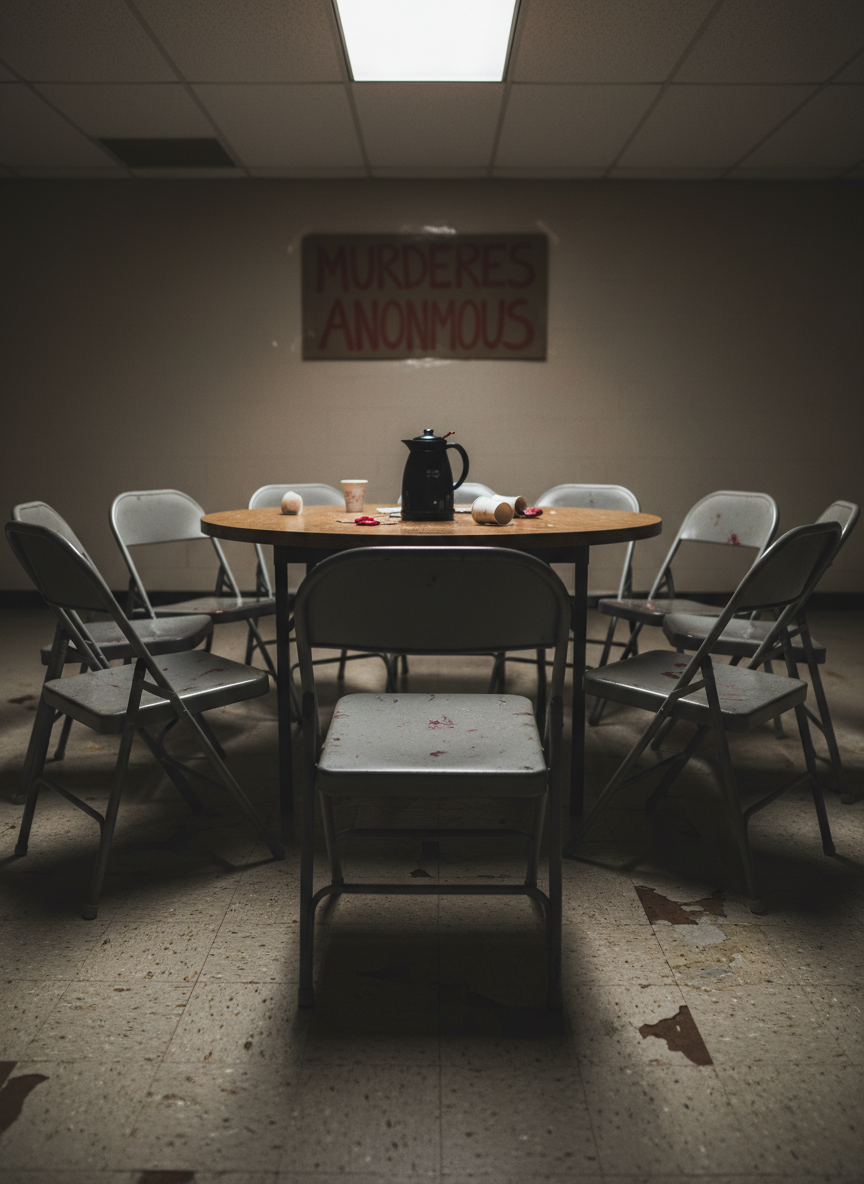
A dimly lit church basement converted into a recovery meeting room, folding metal chairs arranged in a perfect circle around a single, scarred wooden table. At the center sits a battered black metal coffee urn, lipstick-smeared paper cups discarded and crumpled nearby, but with no visible people. Fluorescent ceiling lights flicker intermittently, casting harsh, cinematic shadows that stretch across stained linoleum tiles. A handmade cardboard sign on the wall reads “MURDERERS ANONYMOUS” in uneven red marker, slightly out of focus. Shot at eye level with a shallow depth of field, emphasizing the empty chair closest to the camera, the mood is dark, tense, and foreboding, evoking a gritty thriller atmosphere in photo-realistic cinematic style.

Venue shots reveal cramped chairs, coffee-stained tables, and exit signs glowing red, setting the stage for screenings that feel disturbingly close to a real late-night support group.

Reactions

Rating: 4.5 out of 5.

A chilling, oddly funny portrait of guilt; the audience held its breath through the final frame.

Mara Klein

Rating: 4.5 out of 5.

The screening felt like group therapy in the best, most unsettling way; people stayed afterward just to keep talking about it.

Jon Rivera

Rating: 4.5 out of 5.

Darkly hilarious and strangely compassionate, Murderers Anonymous turns confession into spectacle and left our festival audience rattled yet deeply moved.

Critic Wire